

Can I Do This? Creative SPED Fixes in Texas
Special educators can feel a little like unicorns: rare, highly valued and in demand everywhere. When one of those professionals leaves, schools can find themselves trying to solve a very immediate problem with limited options.
Sudden vacancies happen. Caseloads shift. A complex IEP brings uncharted territory. A compliance deadline is approaching while a parent is on the phone looking for answers.
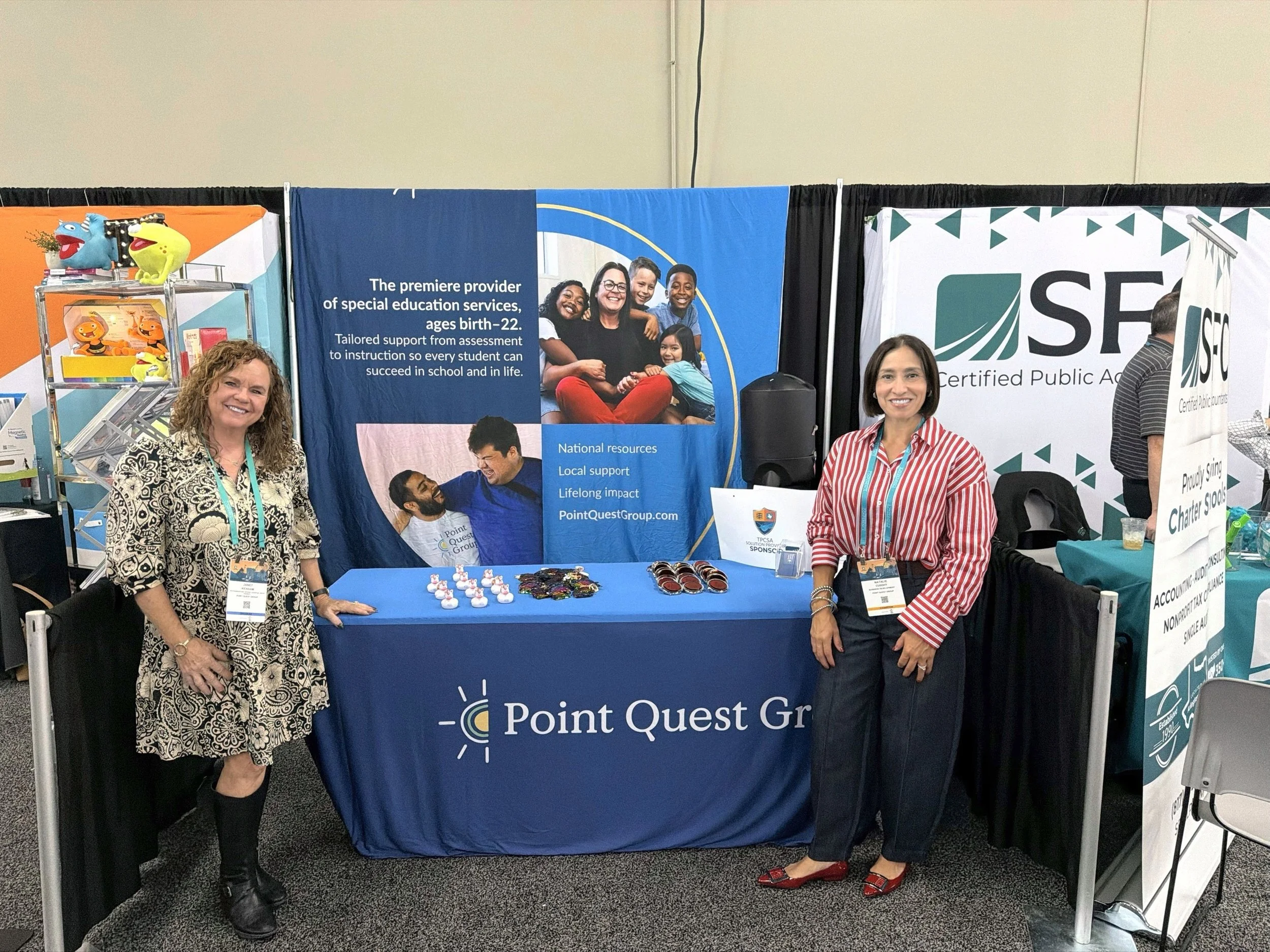
These situations were at the center of “Can I Do This? Creative SPED Fixes in Texas,” a breakout session at the Texas Public Charter Schools Conference on Sept. 29, 2026. Janet Kickham, Co-Founder of LinkUp Teletherapy, a Point Quest Group partner, and Natalie Cuddhy, School Partnership Manager at Point Quest Group, shared practical strategies for handling special education staffing challenges.
Look at staffing before there is a crisis
One of the first recommendations was simple: Audit caseloads against active staffing, role by role, on a regular schedule, not just when a crisis hits. That regular check can help schools identify where staffing is adequate, where capacity is getting tight and where a vacancy could create a significant problem. It also gives teams time to think through possible solutions before they are dealing with an urgent staffing gap.
The same thinking applies to 1:1 aides. A 1:1 should be a decision point, not a default. Schools should ask whether the support addresses the student's actual need or whether it is simply the fastest answer available when a team is under pressure.
Make the whole team part of the plan
A whole-team approach can help keep student plans moving when one person leaves.
That means making sure the team is educated on every child, working together and keeping documentation sufficient and timely. When more than one person understands a student's needs, services and IEP, the team has more flexibility when staffing changes.
The same idea applies to supporting the people who provide those services. Employees and contractors need ongoing professional development, communication and a backup plan when unexpected changes happen.
Direct hire is one piece of the solution
For many roles, direct hire is the goal. Finding the right person can take time, though, and students still need their services while a school is searching. Remote services can provide rapid interim coverage while a school looks for an on-site solution. In some cases, remote services can also work as a long-term model.
Teletherapy has research supporting its use in school settings. Research from 2010 through 2023 has found speech and language outcomes from teletherapy comparable to in-person services for school-age children, along with high parent satisfaction.
The right question is whether the service model works for the student, the school and the particular service being provided.
LinkUp Teletherapy provides comprehensive virtual speech therapy and special education services for PreK-12+ students. Its SLPs provide speech minutes, attend and case manage IEPs, conduct evaluations and screenings, and complete Medicaid documentation. The SLP functions as a member of the school's education team.
Support the people providing services
The people providing services need support, too. For virtual providers, that includes technical support, client support and case manager support. These resources help providers handle the day-to-day work of serving students and can also help with retention.
The same applies to the broader SPED team. Ongoing professional development helps employees and contractors continue building their skills, while a backup plan gives everyone a clearer path when staffing changes happen.
How Point Quest Group can help
Point Quest Group's proprietary LinkUp platform was developed specifically for educators and school-based delivery. Through LinkUp, schools can access virtual special education services and the support that goes along with them.
Point Quest Group can also help schools address compliance needs and quickly place virtual professionals in staff roles. That flexibility is especially relevant as Texas charter schools see record enrollment connected to the state's school choice voucher program.
One example is Red Mesa Unified School District, where more than eight related service providers deliver virtual services. The model helps the district maintain compliance and keep services moving while meeting students' needs.
For schools facing a staffing gap, having access to virtual professionals can provide needed coverage while the school works toward a longer-term staffing solution. In some cases, it can also become part of the school's ongoing service model.
Have a plan before you need it
SPED staffing challenges can show up in many forms, and the strategies shared during the presentation offer schools ways to prepare for those situations before they become emergencies: audit caseloads against active staffing on a regular schedule, consider the actual need behind a 1:1 request, make sure the whole team understands each student's needs, keep documentation current, invest in professional development and have a backup plan for staffing gaps.
Direct hire remains an important part of the picture, while remote services can provide interim coverage or a longer-term option when the model fits.
The question behind the session was “Can I Do This?” For schools navigating SPED staffing challenges, having a plan before a vacancy or other urgent need arises can make that question easier to answer.
Click here to learn more about our services.